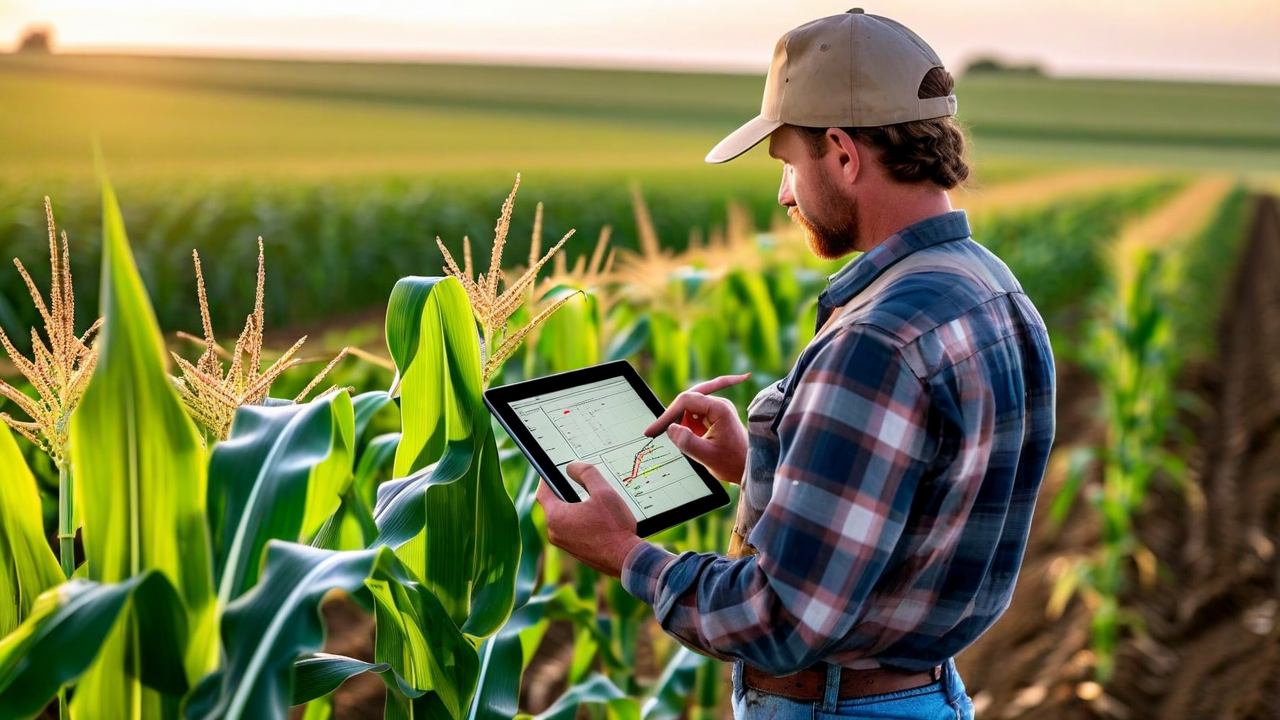
Farm data is worth something. That statement would have gotten a puzzled look from most growers ten years ago. Today it is becoming one of the more important business questions in agriculture, and many farmers have not yet asked the right people the right questions about it.
Your precision ag platform knows which fields you farm, what your soil test results are, what your yield history looks like by zone, what inputs you apply and when, and increasingly, real-time sensor data about soil moisture and canopy conditions across your operation. That data profile, in aggregate, is commercially valuable. Commodity traders, input companies, insurance underwriters, and seed companies have genuine interest in patterns that emerge from farm-level data at scale.
None of that is inherently a problem. But you need to understand exactly what you are agreeing to before you upload three seasons of yield maps to a platform you just signed up for.
The Questions to Ask
The most important question is who owns the data you generate and upload. The correct answer is that you do. Your farm's yield history, soil data, application records, and operational data belong to you. Any platform that claims ownership of your raw farm data as a condition of service is crossing a line that no legitimate precision ag vendor should cross. If the terms of service are unclear on this point, ask your account representative to clarify in writing. If they cannot, that is your answer.
The second question is whether your data is used in aggregate to train or improve the platform's models. This is different from ownership. Most platforms use anonymized, aggregated data to improve their algorithms. CropMind does this: patterns across our farm network improve yield predictions and disease detection for everyone in the network. But the underlying farm-level data is not sold, shared with input manufacturers or commodity companies, or used in ways that give other parties information about your specific operation.
The third question is what happens to your data when you cancel the subscription. You should receive a full export of all data you uploaded or generated through the platform within a reasonable period, typically 30 days. The platform should delete your data from its systems within a defined timeframe after account closure. Ask specifically about whether aggregated model contributions are retained and whether individual-farm data is fully purged.
The Aggregation Question Is More Subtle
The data ownership conversation gets more complicated when you ask about aggregated insights. Even if your specific farm data is never shared, patterns derived from your data can be commercially valuable in ways that do not directly benefit you.
Consider: an input company that has access to aggregated yield response data across 50,000 enrolled acres, organized by soil type and management practice, has a meaningful information advantage in the market. They can make better pricing decisions, better product positioning decisions, and better research allocation decisions based on that data. You generated part of that insight, but you do not receive any compensation for it.
This is a genuine tension in the precision ag industry, and there is no universally agreed-upon standard for how it should be handled. The American Farm Bureau Federation and several state farm bureaus have published voluntary data principles that address this, but they are not legally binding on vendors. Some vendors have opted into transparency frameworks that specify aggregate data use policies. Ask specifically whether the vendor has adopted any published data principles framework and what it covers.
The Interoperability Problem
Data portability matters as much as data ownership. If you decide to switch platforms in year four, can you export your data in a format that another platform can import? Yield maps, soil sampling data, and application records exist in multiple proprietary formats that are not universally interoperable. The inability to move your data freely between platforms creates vendor lock-in that is independent of contract terms.
Industry efforts around data standards, including ADAPT (Agricultural Data Application Programming Toolkit), have made some progress on interoperability, but implementation is uneven across the industry. Ask whether the platform you are evaluating supports ADAPT data exchange, whether yield map and application data can be exported in standard formats, and whether exports include all data fields or just summary data.
Insurance and Financing Implications
Farm data has growing relevance in crop insurance underwriting and agricultural lending. Some insurance programs offer premium discounts for farms with verifiable monitoring data. Some lenders are beginning to factor precision ag data into operating loan underwriting for large operations.
Before signing agreements that allow your data to be shared with affiliated financial services partners, understand exactly what is being shared and how it will be used. A yield history that shows below-average performance in a bad year could theoretically be used against you in a credit evaluation, even if that year was an anomaly. Data shared with insurance affiliates should be governed by clear disclosure about how it affects your policy terms.
Our Position
CropMind's data policy: you own your farm data, period. We use anonymized aggregate data to improve platform models. We do not sell farm-specific data to any third party, including input companies, commodity traders, or financial services firms. You can export your complete data record at any time from the platform dashboard. On account cancellation, we export your data automatically and delete farm-specific records within 60 days.
We publish this not because we expect a pat on the back, but because we think every vendor in this industry should be able to say the same thing, and not every one of them can. Ask the question. Require a written answer. It is your data and it is worth protecting.
Read Our Full Data Policy Before You Decide
Our privacy policy and data terms are written in plain language, not legal boilerplate. Read them, ask us questions about anything unclear, then decide if CropMind is the right fit for your operation.
Request a Demo