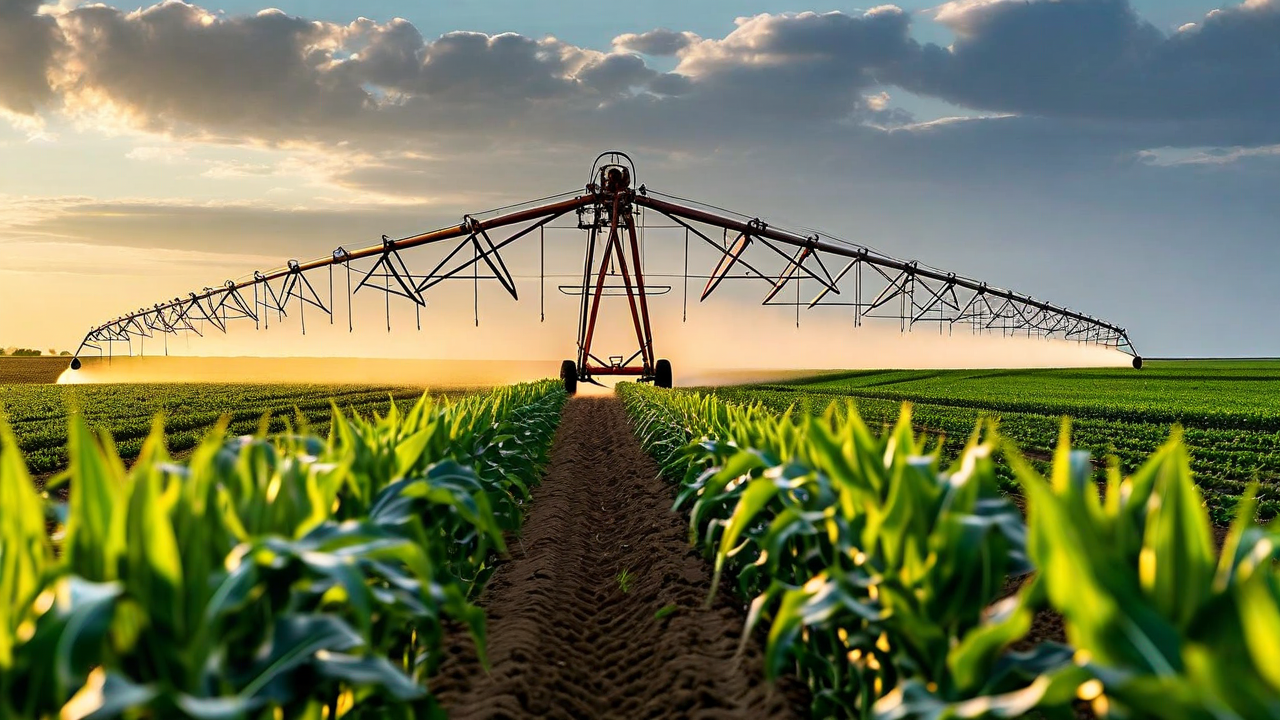
Irrigation scheduling in most farm operations runs on one of two systems: calendar rotation or gut feeling. Neither is wrong, exactly, both have produced profitable crops for decades, but both also result in systematic over-irrigation that wastes water, increases pumping costs, and in some soil types creates drainage problems that hurt the crop. The 30% figure is not a marketing number. It comes from USDA NASS survey data and university extension research comparing measured crop water needs against actual irrigation volumes on farms without precision scheduling tools. The gap is real.
Understanding why the waste happens is more useful than just stating the number. The waste is not random. It follows predictable patterns tied to how growers make scheduling decisions under uncertainty.
The Asymmetry of Irrigation Mistakes
When a farmer has to choose between irrigating now and waiting another day or two, the consequence of being wrong in each direction is very different. Apply water when the crop does not yet need it and you waste money on pumping, maybe compact the soil slightly, and potentially create the conditions for disease pressure if you wet the canopy. Skip irrigation when the crop does need water at a critical growth stage and you clip yield. In corn at VT or R1, a single day of moisture stress can reduce kernel set by 2 to 5%.
This asymmetry drives irrigation decisions toward over-application. It is rational caution. If pumping costs $8 per acre-inch and an unnecessary irrigation costs $40, that is preferable to a stress event that costs $35 in yield per acre. The problem is that this caution compounds across every irrigation event in a season. A farmer who errs on the side of irrigation by one to two days per event, across eight to ten irrigation events, over-applies by a substantial margin relative to what the crop actually consumed.
What Proper Scheduling Actually Requires
A soil water balance model requires three inputs: an estimate of how much water the crop is using each day, a measure of how much water is in the root zone currently, and a forecast of how much effective precipitation is coming. With those three numbers updated daily, you can estimate with reasonable accuracy when the root zone will reach the management allowed depletion threshold that triggers irrigation.
Daily crop water use, expressed as evapotranspiration, can be estimated from weather station data. The Penman-Monteith equation uses air temperature, humidity, wind speed, and solar radiation to calculate reference ET, which is then adjusted by a crop coefficient that changes with growth stage. This is not a new calculation. University extension offices have published ET-based scheduling spreadsheets for 30 years. The reason most farms do not use them is that they require daily data entry and a minimum level of comfort with the calculations that not every operation has built into its workflow.
Current root zone water content is what soil sensors provide when they are properly calibrated and correctly installed relative to the active root depth, which changes from emergence through mid-season. At R3 stage in corn, effective root depth reaches 24 to 36 inches in most Corn Belt soils. A sensor installed at 12 inches is measuring the top half of the root zone only and will read depletion earlier than the full root zone actually experiences it.
Precipitation forecast integration sounds simple but adds meaningful value. Knowing that there is a high-confidence 0.9-inch rain event in the 48-hour forecast should cause an immediate recalculation of whether a planned irrigation event is necessary. A 0.9-inch rain on a field at 70% of field capacity replaces two thirds of a typical irrigation application. Applying irrigation the day before that rain event is a direct waste of pumping cost and water allocation.
What Farms Are Saving in Practice
Across irrigated farms enrolled in CropMind in Nebraska, Kansas, and southwestern Iowa over the past two seasons, average irrigation water application fell 22% compared to pre-enrollment seasons after controlling for precipitation differences. The range was 14% to 31% reduction depending on the baseline scheduling practice the farm was using before enrollment.
Pumping cost reduction followed directly from water reduction. At an average pumping cost of $3.80 per acre-inch for electric center pivot systems, a 22% reduction in a typical 12-inch irrigation season saves $10.03 per acre in direct energy cost. For a 640-acre irrigated operation running a single pivot, that is $6,400 per year in electricity savings, net of the monitoring subscription cost.
A 2,100-acre corn and soybean operation in Dawson County, Nebraska enrolled in spring 2024 and tracked their results carefully. Pre-enrollment, they averaged 13.8 acre-inches of irrigation per season on their corn ground. In 2024, they averaged 10.1 acre-inches. In 2025, 9.8 acre-inches. Corn yields were 224 and 218 bushels per acre in those two seasons, against a five-year pre-enrollment average of 211 bushels per acre. They used 29% less water and got better yields.
The yield improvement is worth noting. In two of their five pre-enrollment seasons, over-irrigation during tassel created disease pressure that required additional fungicide applications. Reducing excess canopy wetness eliminated those applications in both post-enrollment seasons, saving $18 per acre per event in fungicide cost and reducing the risk of a delayed application window if equipment was not available.
The Well Allocation Factor
In Nebraska and several other High Plains states, groundwater depletion from the Ogallala Aquifer has led to allocation limits on irrigation withdrawals. Operations with annual allocation limits face a real decision: if they over-irrigate early in the season, they may not have enough allocation remaining for the critical pollination period. Precision scheduling that reduces early-season applications preserves allocation for the highest-ROI timing later in the season.
For operations under tight allocation, the financial case for precision scheduling goes beyond input cost savings. An operation that runs short of its allocation at R1 while corn is under heat stress in July faces a yield loss that cannot be recovered. Proper allocation management across the season is the difference between a profitable year and a bad one for some irrigated operations in water-restricted regions.
Getting Started Without Full Sensor Infrastructure
You do not need a full sensor network to improve irrigation scheduling. A weather-station-based ET model combined with a rain gauge and a 7-day precipitation forecast is a meaningful improvement over calendar scheduling for most farms. The CropMind scheduling tool can run on weather data alone if sensor data is not available, using soil water holding capacity estimates from the SSURGO database and your reported irrigation applications to maintain a water balance estimate.
This approach has higher uncertainty than sensor-integrated scheduling, typically plus or minus 1.2 to 1.8 inches of root zone water content compared to plus or minus 0.4 to 0.7 with calibrated sensors. But even the weather-station-only version reduces over-irrigation by 12 to 18% on average compared to calendar rotation, because the precipitation forecast integration alone eliminates a significant portion of unnecessary pre-rain irrigation events.
Start Tracking Your Crop's Actual Water Needs
We can have your irrigation scheduling model running before your first irrigation event this season. Request a demo and tell us about your current system setup and we will show you what precision scheduling looks like for your fields.
Request a Demo