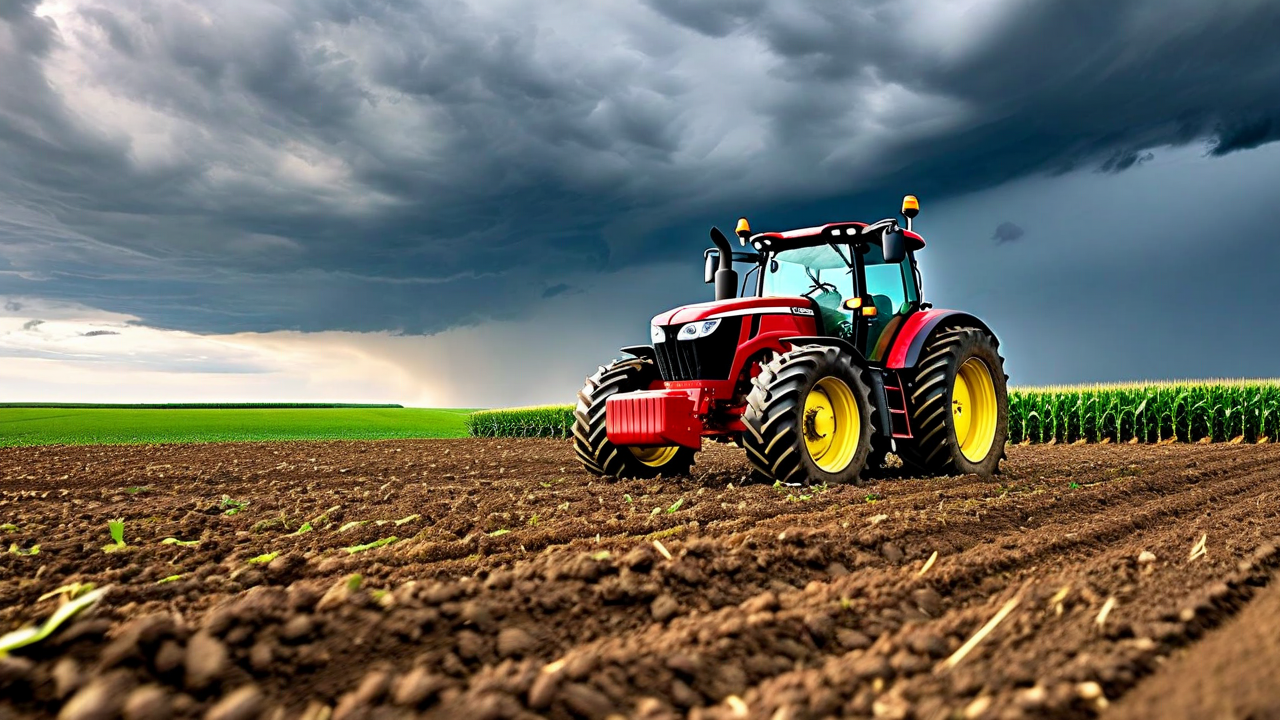
The old planting calendar still exists, but it is doing less and less work. A corn farmer in Iowa who plants by the calendar rule of "soil temperature above 50 degrees, after May 1" is working with a heuristic developed when weather patterns were more predictable and weather data was less available. Today, that rule is a starting point at best. At worst, it causes you to plant into a window that looks fine and closes two days later with a three-inch rain event that compacts the seedbed and delays emergence by two weeks.
We are not in a period of smooth climate transition where every year is a little warmer and a little different from the last. The trend is toward more variance, not just different averages. Spring planting windows are shorter in some years, longer in others, and the weather patterns that signal a good planting window are less stable than they were 20 years ago. Data from the NOAA Storm Events Database shows that April and May precipitation events in the Corn Belt have increased in intensity, with the frequency of single-day rainfall events exceeding 2 inches rising approximately 18% since 1990.
What a Planting Window Actually Requires
A workable planting window requires soil temperature at 2-inch depth above threshold, soil moisture below field capacity, no precipitation forecast for at least 48 hours post-planting, and adequate drying time after the last significant rain event. Getting all four of those conditions to align is harder than any one of them individually.
Most farm planning tools treat planting windows as static: here is the target date range based on historical averages, go plant. Adaptive planning treats the window as dynamic, updating continuously as soil conditions and weather forecasts change. The difference matters most at the start and end of the planting season, when marginal conditions can tip either way based on a three-day forecast shift.
CropMind's planting window module pulls soil temperature data from a network of in-field sensors plus regional stations from the Iowa Environmental Mesonet and NOAA cooperative observer network. It combines that with hourly soil moisture readings, extended weather model output updated every six hours, and field-specific drainage characteristics from our soil survey database. The output is a field-by-field planting readiness score updated twice daily during spring.
The 2025 Spring as a Test Case
Spring 2025 in the central Corn Belt was a case study in volatile planting conditions. A wet April gave way to a brief warm dry spell in late April, followed by two weeks of intermittent rain in early May. Growers who tried to plant in the brief April window on many fields saw emergence issues from soil crusting after a late April rain event. Growers who waited for the May window saw conditions dry quickly in the second week of May and were able to plant into excellent conditions with soil temperatures of 56 to 62 degrees.
On farms enrolled in CropMind, the planting window tool flagged the late April window as marginal on 68% of fields based on the 7-day precipitation outlook showing a 40% or higher probability of 0.75 inches or more within 36 hours of planting. The tool recommended a wait, assigning a "caution" status to those fields while marking fields on lighter soils with better drainage as "plant ready."
End-of-season data from those farms showed that fields where growers followed the "wait" recommendation had emergence uniformity scores averaging 94%, compared to 81% for fields where growers planted during the flagged window. The yield impact of that emergence uniformity difference averaged 7.3 bushels per acre in favor of the delayed planting fields, based on our agronomic model correlating stand uniformity with final yield.
Hybrid Selection Interaction
The planting timing question also interacts with hybrid selection in ways that most planting planners do not account for. Hybrids with higher relative maturity ratings are more sensitive to late planting dates because they need more growing degree days to reach black layer. A 108-day hybrid planted May 20 in central Iowa is at meaningful frost risk in most years. A 104-day hybrid planted the same day is not.
CropMind's adaptive planting module links to the hybrid performance database to adjust recommendations by field based on the hybrid already assigned to each field. If the optimal planting window for a given field keeps getting pushed back due to weather, and the delay creates frost risk for the planned hybrid, the system flags the hybrid selection as a risk factor and suggests either accepting a planting date with a quality concern noted, or swapping to a shorter-season hybrid if seed is available.
This interaction caught a real problem for 14 farms in our network in 2025. Growers with late-planted fields carrying 108-day or higher maturity hybrids received alerts recommending they evaluate whether stored seed of a shorter-season alternative was available. Six of those farms made hybrid swaps; eight did not. The eight farms that kept their original hybrids saw first frost occur before full black layer on an average of 11% of their acres in those late-planted fields.
The Limits of 7-Day Forecasting
Extended weather forecasts degrade in accuracy quickly beyond 5 days. Our planting window recommendations weight the 0 to 72 hour forecast heavily and discount the 4 to 7 day range. For decisions that depend on conditions beyond that window, we provide a probability-based outlook rather than a specific recommendation. We tell you there is a 65% chance of a workable window opening in the next 10 to 14 days, not that planting conditions will be good on May 12.
Farmers understand forecast uncertainty better than most weather app users because they have spent careers making decisions under it. What they find useful is an honest probability estimate, not false precision. Our approach is to give you the range of likely outcomes and tell you which fields are closest to planting-ready so you can prioritize when a window does open.
See Your Fields' Planting Readiness Score
CropMind's planting window module is active from March 15 through June 15. Request a demo and we will walk you through what the tool shows for your fields based on current soil and weather data.
Request a Demo